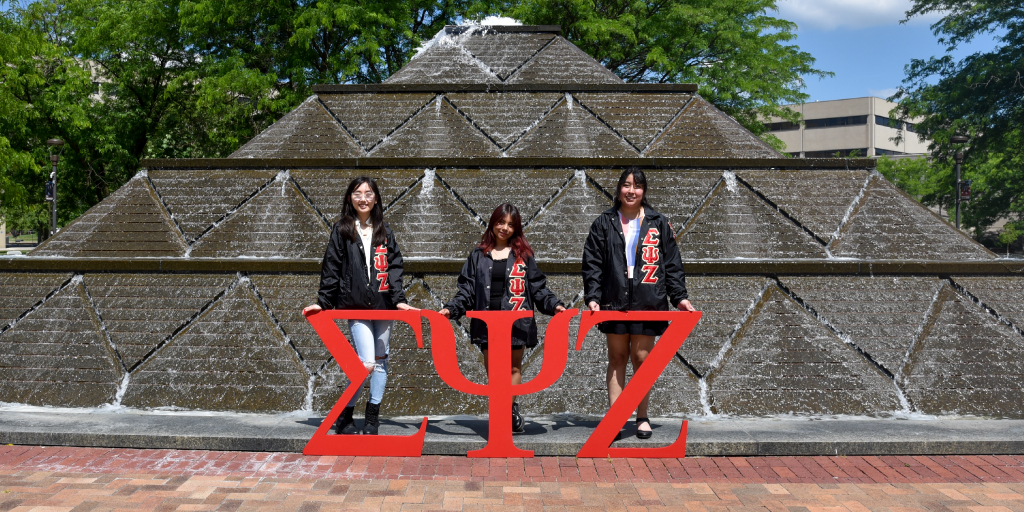
Becoming a member of a fraternity or sorority offers lifelong benefits—and it's a great way to meet new people and build new friendships during your first year on campus. By joining, you'll be embraced by peers who will be there to support you, inspire you, and value you for who you are.
If you're interested in any of our fraternities or sororites, fill out our interest form to get connected to our chapters.
College Panhellenic and Interfraternity Council primary recruitment
Primary recruitment is the best opportunity to be introduced to all of the respective IFC fraternities and Panhellenic sororities. Registration for both IFC and Panhellenic recruitment is online and will open in the summer before classes start in August. Formal recruitment for both occurs in September.
Each CPH and IFC chapter is a values-based organization. As you participate in the process, find out what values are important to the members of each chapter, and ask questions about what each chapter expects regarding time commitment, financial obligation, and academic expectations.
Joining a culturally based organization
Our National Pan-Hellenic Council (NPHC) and Multicultural Greek Council (MCGC) organizations set their own timeline for recruitment/intake within their respective national organization’s guidelines. Chapters under both NPHC and MCGC councils are mostly city-wide/metro chapters, meaning that the chapters are eligible to accept members from more than one university in the greater Indianapolis Metropolitan area. When seeking out these organizations, do your research.
To determine which organization is right for you, we encourage students to attend different events on campus and in the Indianapolis area. Get to know the members of each organization to help determine your forever home. Attending informational meetings are also a great way to learn more about the organizations.
Upcoming recruitment events
July 22 – CPH Recruitment Registration Opens ($25)
September 3 – Fraternity and Sorority Open House, 6:30–8:30 p.m., Campus Center 450
September 4 – IFC Recruitment Orientation, 6–8 p.m.
September 9–19 – IFC Formal Recruitment, Campus Center 450 B
September 11 – CPH Recruitment Orientation, 7–9 p.m., Campus Center 450’s
September 11 – NPHC Greek 101, 7–9 p.m., Taylor Hall 104
September 11–15 – CPH Formal Recruitment
October 4 – NPHC Yard Show
Recruitment FAQs
What is expected of fraternity or sorority members?
How will membership affect my academics?
What leadership opportunities are available to students as both new members and initiated members?
Does the chapter perform hands-on community service? If so, how often?
What are the expenses associated with membership? How does this vary?
What type of member is the chapter looking for?
What values does this organization promote?
What is the time commitment?
Why should I join your fraternity or sorority?
How well do you know the members in your chapter?
What benefits can your chapter offer me now and after I graduate?
How is your chapter different from the others?
Why did you join your organization?
Joining a fraternity or sorority in your first semester of college can help you adjust to campus life. By providing you with a supportive group of friends who can help you navigate the challenges and fun experiences of college, you might feel more at ease on campus.
Many individuals who do not join in their first year tell us they regret not doing so. It is completely understandable if you do not feel ready to join a Greek-lettered organization in your first year of college. Upperclassmen are also welcome to join these organizations.
There are two forms of recruitment: formal and informal.
Formal recruitment is held near the beginning of the fall semester each year for Interfraternity Council (IFC) and College Panhellenic Council (CPH) groups and in the spring for IFC fraternities. The formal recruitment process lasts approximately a week and requires you to attend recruitment events to get to know the fraternities or sororities. The Panhellenic sororities have a formal process only in the fall.
During the spring, the sororities have informal recruitment—called COB for short—which is shorter than the formal recruitment process. At the end of recruitment, bids—or invitations to membership—are distributed and the new member orientation process begins. After completing the orientation, new members are initiated into the organization.
Participation in the membership intake process is required in order to join an NPHC or MCGC organization. Intake occurs at various times throughout the year at the discretion of each organization. During intake, individuals participate in the new member orientation process and are initiated at the end of the process. It is heavily encouraged that students do extensive research into NPHC and MCGC fraternities or sororities by visiting their national websites and reading historical documents about each group prior to contacting the organization.
Every organization is built on unique beliefs and principles. The decision to join a large or small organization, a culturally focused group, a general fraternity or sorority, or a new organization or an established one, ultimately comes down to personal choice.
Every organization has its own strengths. Choosing a fraternity or sorority is similar to selecting friends—choose the group that you feel most at ease with.
Fraternities and sororities all prioritize scholarship, leadership, service, and a sense of brotherhood or sisterhood. When attending recruitment events, make sure to inquire about topics that are significant to you, such as expenses, social activities, professional development, and community service opportunities. It is important to make your decision independently, even if your roommate, best friend, or group of peers have already chosen a fraternity or sorority. Your friends will always be your friends, but the decision to join a fraternity or sorority is up to you.
Hazing in any form is strictly prohibited.
The term hazing refers to any actions or activities that may negatively affect the development of a person or an organization; which cause mental or physical harm; or which subject individuals to harassment, embarrassment, ridicule, or distress. Examples of situations that are considered hazing include, but are not limited to, tests of endurance, physical abuse, psychological abuse, non-sanctioned time commitments, morally degrading or humiliating activities, forced ingestion of any substance, activities which interfere with academic pursuits, and servitude.
Participation in student organizations should be a positive experience that focuses on organizational growth and creating a sense of belonging and connection among members. We want all students to promote the creation of a community that cares and supports one another. To that end, we encourage all students to support each other in identifying anything that may be hazing or any behavior that may interfere with a positive organization experience.
IU Indianapolis takes all reports of hazing seriously. If you believe you or someone you know has been a victim of hazing, please contact the Assistant Program Director for Fraternity and Sorority Life at 317-278-6101 and fsl@iu.edu.